
Kerala has always been a hotspot for wanderlusts, nature enthusiasts, backpackers as well as foreigners. Glimmering on the edge of the tourism industry, the small state of Kerala aligning the Western Ghats, is a region of tremendous potential and great natural beauty.
Located on the northern coastal part of Kerala is the land of Theyyam locally named Kannur and fondly called Cannanore. The city is an ode to a beautiful amalgamation of art, culture, food and life. Since time immemorial Kannur has been hailed as an important and influential sea port attracting footprints from the Dutch, Portuguese, Arabs and the British. The district is home to a plethora of cultural festivities and historic monuments from forts, temples and mosques attracting thousands of visitors from all over the world. The coming of an international airport at Kannur scaled up the flow of tourists within and outside of the country.
With a clear boom in religious tourism, hospitality projects are gaining momentum in cities and districts that are known for their cultural and religious practices. Kannur acts as both religious as well as a transit destination. The threshold of comfort has been redefined as more and more tourists and local visitors thrive for experiential staycations.
Site and Salient Features
Located 11km away from the airport, Luxe Cinnamon will serve as a vision for affordable luxury where tourists can experience traditionalism in the lap of comfort and tranquillity. The site of the project is well situated in close proximity to the Parassini Muthappan temple, Arakkal Museum, Payyambalam beach and links with the transportation network as well. Accessibility is crucial to planning a hospitality project and the proposed site sits well within the radius of easy accessibility to nearby tourist and religious places.
The context of a project thrives best when it is subjected to minimal alterations or changes. Existing contours, vegetation, landscape and backdrops were carefully intertwined, framed and merged with the design and its evolution process.
Planning
With regional modernism at the forefront of planning, the proposed design embodies a traditional modernity that is hard to pass over. From locally sourced materials to modern reflection of glass and steel, the hotel serves as the ideal location to experience Kerala
traditional architecture at its best. The building mass has been modelled to complement the existing site features.
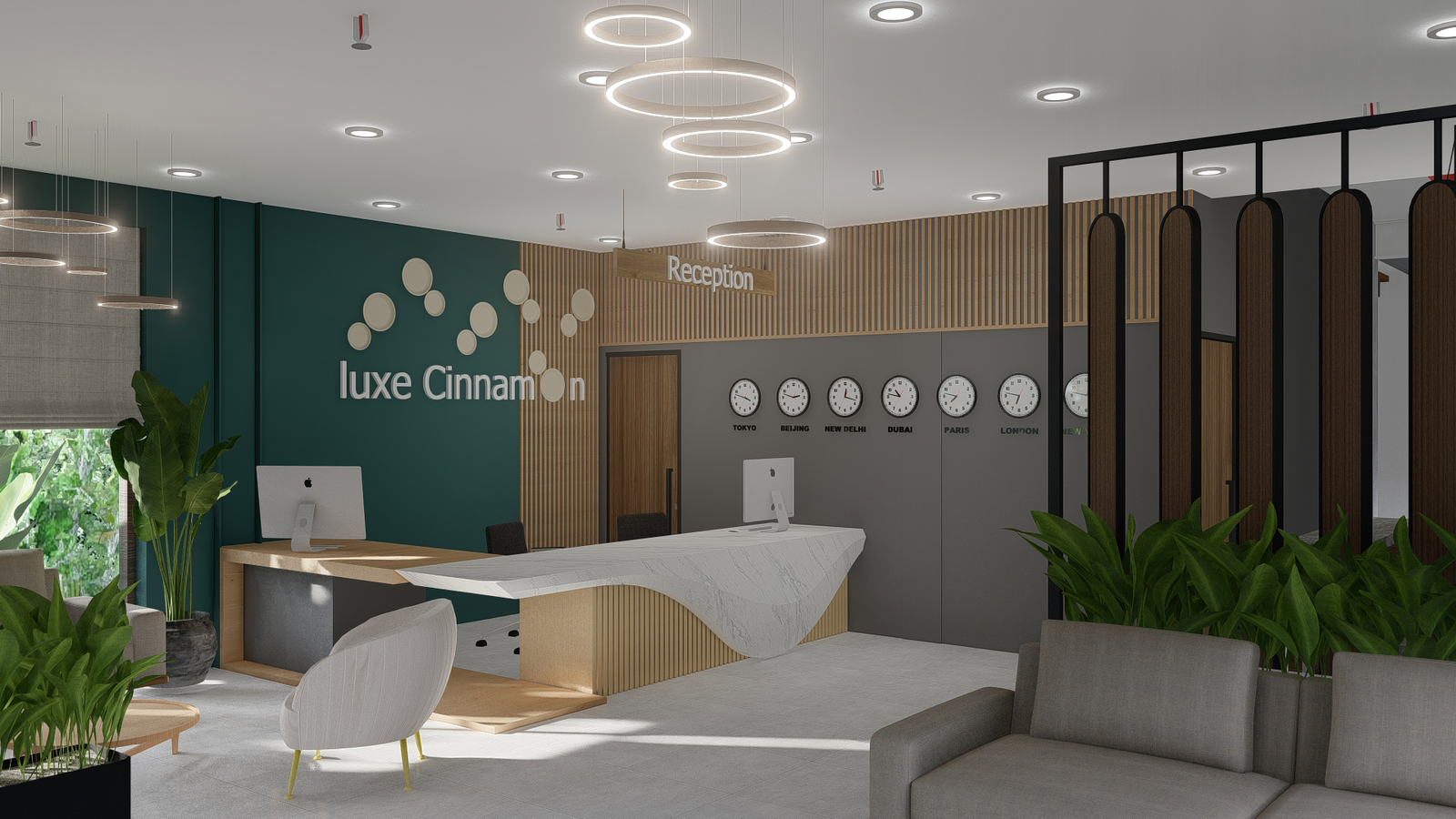
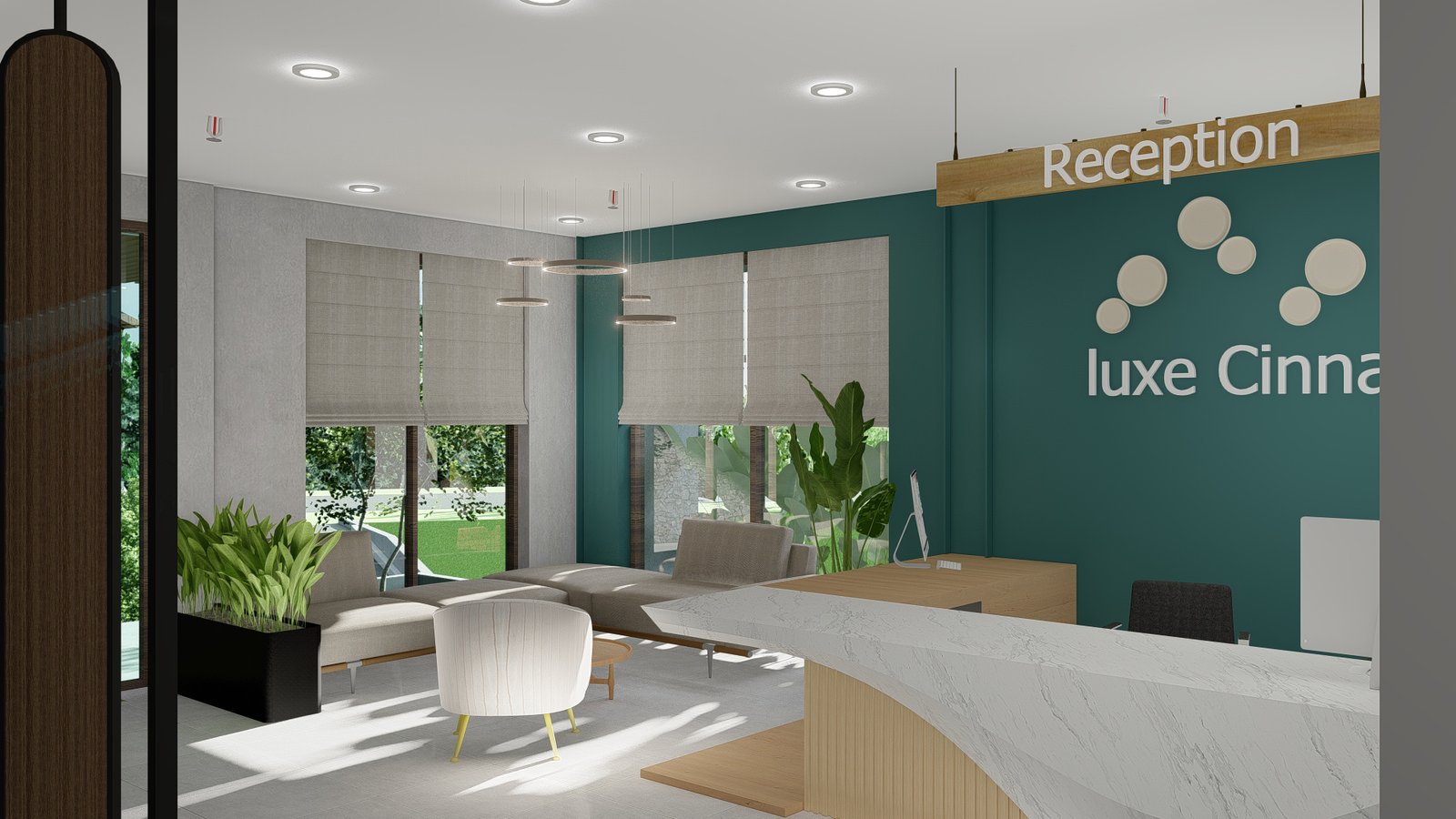
Floor plans have been developed in an L shaped layout in order to maximise views and accessibility. One enters the building through a foyer into a well lit lobby space adorned with mute and complementary textures. The ground floor area consists of exclusive bar lounges
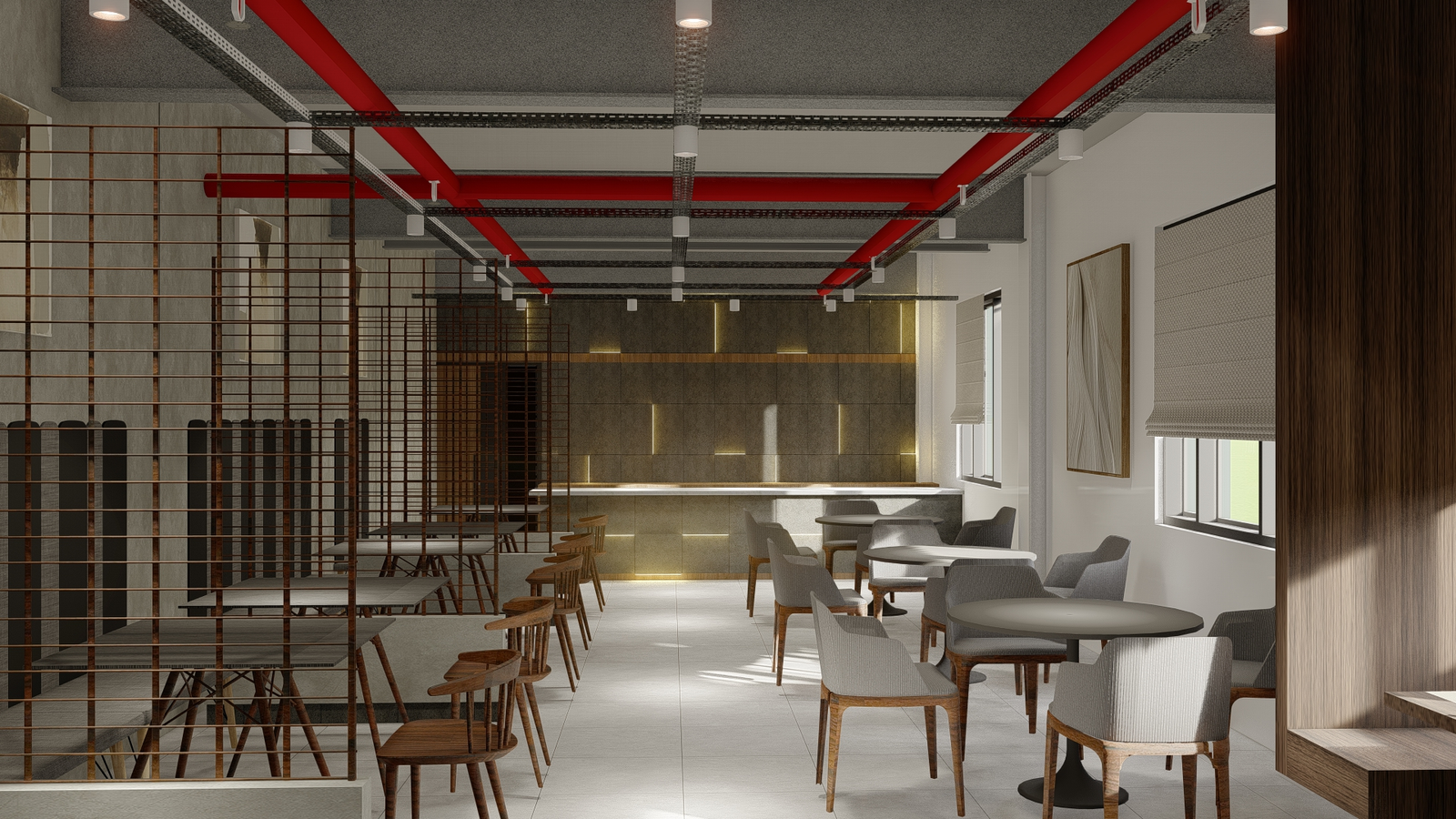
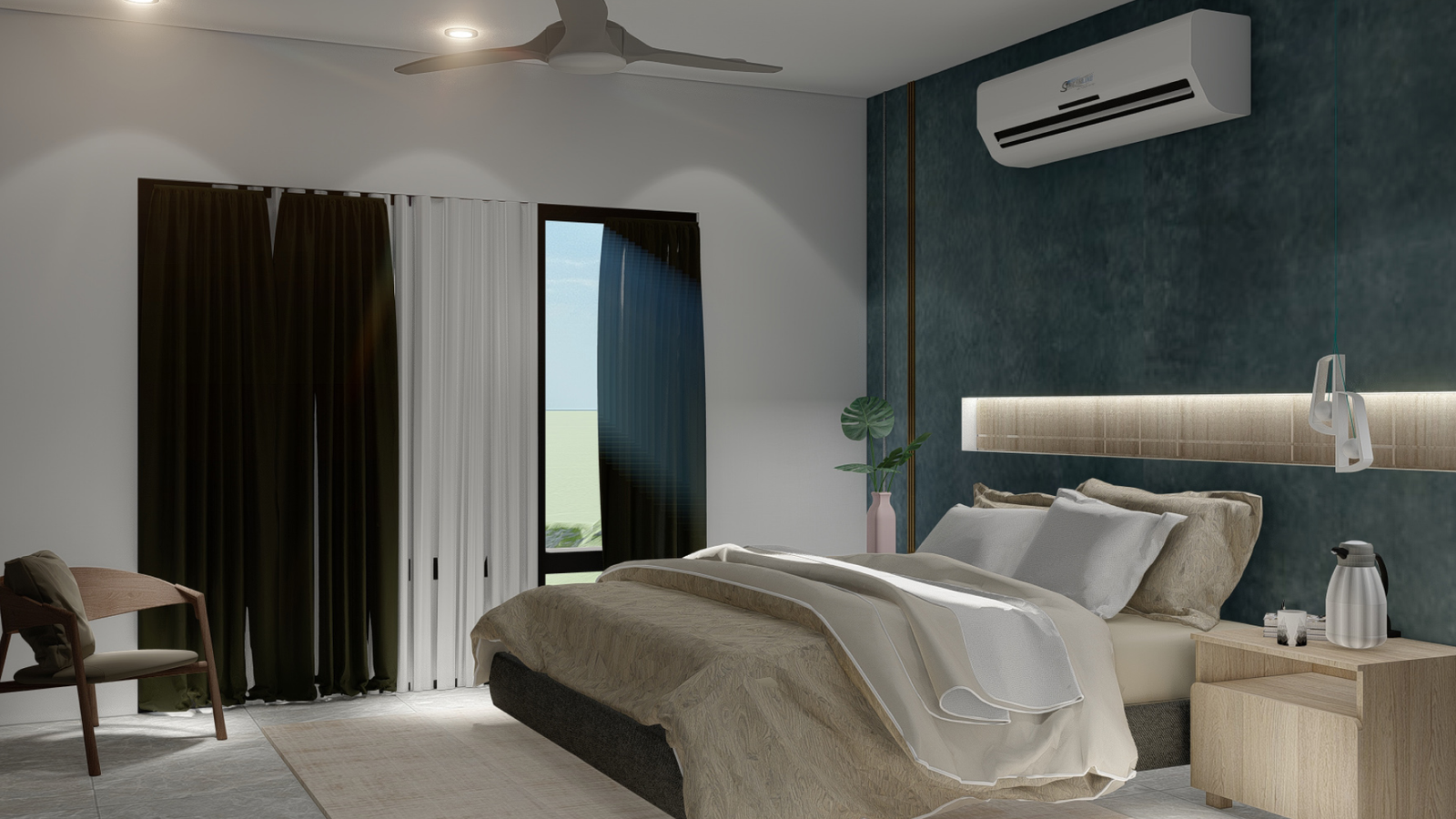
that can accommodate upto a hundred customers along with supporting amenities. A flight of stairs going below culminates in a more formal setting with a full fledged professional kitchen that caters to the adjacent restaurant space that covers an area of 65 sq mt. The floor level also boasts of an executive bar lounge with a 360 degree view of the elevated landscape. The vertical zoning caters to a segregation of private and public spaces. The cellar floor further down of the building comprises ten high end hotel rooms ranging in three different
layouts based on location and carpet area. All rooms are aligned on the periphery of the building, thus capturing precise framed views of the surroundings. This is precisely how an L shaped planning process reaps its benefit addressing accessibility, visual linkages and
effective space utilisation. A cavernous banquet hall rests just above the foundations of the Luxe Cinnamon flaunting in its commodious and capacious interior that can entertain around 120 people at a time. The hall is supported by ancillary amenities like staff rooms, rest areas, washrooms and storage spaces.
The reverse planning and vertical zoning, where one enters through the brick cladded foyer on the ground floor and descends to subsequent floors, arises from the existing contour andsite conditions. This demarcates an efficient planning approach to design, resounding the very ideals of sustainability, cost efficiency and tropical modernity.